Westlake Hillside vs. Lake Living: What Fits Best?
June 18, 2026
June 18, 2026
If you are torn between a hilltop view and time on the water, you are not alone. In Westlake, that choice can shape your daily routine, maintenance needs, privacy, and even how you get in and out of your driveway. This guide will help you compare hillside and lake living in practical terms so you can narrow your search with more confidence. Let’s dive in.
West Lake Hills sits along the west bank of Lake Austin on the eastern edge of the Balcones Escarpment. According to the city’s master plan, the area is defined by rugged terrain, dense foliage, scenic views, and low population density, with elevations ranging from about 500 feet near the lake to more than 900 feet on the hilltops.
That topography means two homes in Westlake can offer very different living experiences, even if they are only a short drive apart. In many cases, you are comparing lot shape, driveway grade, tree cover, drainage patterns, visibility, and access just as much as you are comparing square footage or finishes.
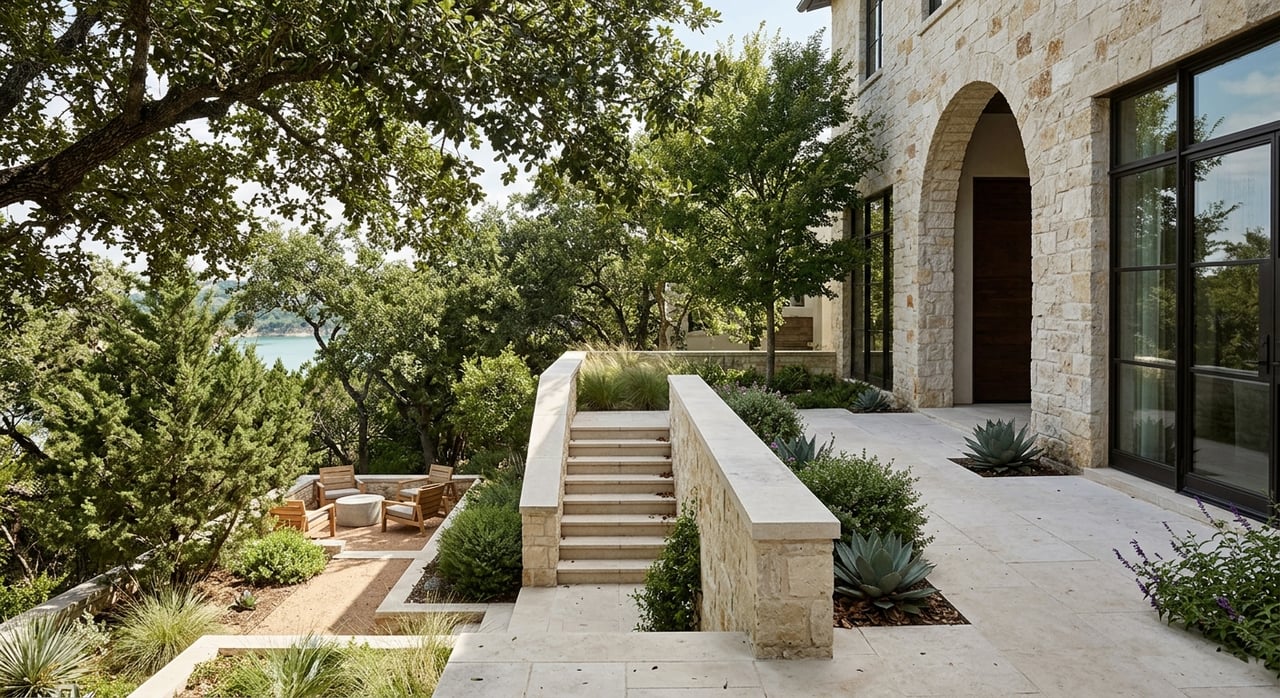
Hillside homes in Westlake often appeal to buyers who want privacy, tree cover, and long-range views. The city’s planning guidance emphasizes careful site planning, natural buffers, and protection of privacy in residential areas.
Many of these properties sit on larger parcels, and the setting can feel tucked away from the road. If you value a more secluded feel, a hillside address may check that box better than a home closer to the shoreline or a main corridor.
The city’s master plan describes residential areas with minimum one-acre lots in some locations, along with goals like minimized visibility and tree buffering. That helps explain why many hillside properties feel more private and visually separated from neighboring homes.
For some buyers, that is the biggest advantage of hill living. You may gain wooded surroundings and a stronger sense of retreat, which can be hard to replicate on flatter, more exposed sites.
The same terrain that creates views can also create more complexity. The city notes that knolls, saddles, and ridges should remain undisturbed where possible, and slopes above 20 percent raise erosion and runoff concerns.
In practical terms, that means a beautiful lot may also require more careful evaluation. A home can be visually stunning but still come with questions about drainage, slope, retaining features, and ease of access.
West Lake Hills’ 2023 firewise assessment notes that steep terrain and canyons shape the landscape, and that many driveways are too steep or too narrow for large fire-truck access or turnarounds. For you as a buyer, that is not just a technical issue. It can affect day-to-day convenience, guest parking, moving logistics, and how easy the property feels to use.
This is why a showing in Westlake should go beyond the house itself. The approach to the property, the driveway angle, and the turnaround space can all matter just as much as the floor plan.
Hillside buyers are often surprised by how important wildfire and runoff questions can be. The city’s firewise assessment says steep slopes can increase uphill fire spread and intensity, and embers are a leading cause of home loss.
The city’s drainage guidance also notes that runoff follows natural topography and that development must avoid negative impacts upstream or downstream. If you are considering a hillside home, it is wise to look closely at how the site handles water and how the lot sits within the surrounding terrain.
Lake Austin-adjacent living attracts buyers who want easier access to water-based recreation and the lifestyle that comes with it. But in Westlake, lake living is not just about being near the water. It is about the exact rights and improvements tied to a specific parcel.
That distinction matters because not every home with a water view has usable waterfront. In this part of the market, details around shoreline ownership, dock rights, and permitting can make a major difference.
Texas Parks and Wildlife says almost all of Lake Austin’s shoreline is privately owned. Public bank access is limited to specific sites, including the Loop 360 bridge, Emma Long Park, Mary Quinlan Park, and Fritz Hughes Park, and public launch options include Walsh Boat Landing and the Loop 360 ramp.
For homeowners, that means generic proximity to the lake does not automatically translate into private use. If direct water access is important to you, the real question is whether the parcel has legal shoreline access or dock-related rights.
The City of Austin says an approved site plan is required before applying for a residential boat-dock permit on Lake Austin. It also requires boat docks to be properly addressed and registered, with residential dock registration renewed every five years.
That makes due diligence especially important for lake-adjacent homes. A dock, slip, or shoreline improvement should be evaluated based on actual permit history and current registration status, not just listing language or appearance.
The draw of lake living is easy to understand. You may be closer to boating, paddling, or spending time near the water, with public launch points and limited public access points available around Lake Austin.
Still, the experience can vary widely by address. One property may offer meaningful waterfront utility, while another may mainly offer a view and nearby recreation without private access.
In Westlake, location is not just about map distance. It is also about which road network your home touches and how that affects your routine.
TxDOT describes Loop 360 as a major north-south commuter corridor connecting US 183 with US 290 and SH 71, and notes severe congestion along the route. Several intersections, including Westlake Drive and Cedar Street as well as Courtyard Drive and RM 2222, have been priorities for improvement.
The City of West Lake Hills has also reported continued work related to the Loop 360 at Courtyard Drive and RM 2222 project, including some night operations to avoid peak lane closures. If you are choosing between a hillside home and a lake-adjacent home, commute patterns and construction exposure may affect your quality of life more than expected.
The city’s master plan says steep terrain, road conditions, development patterns, and worsening traffic create issues for motorists and emergency vehicles. That is why two homes with similar finishes and price points can feel very different once you factor in the route home.
A property near Bee Cave Road may function differently from one that depends on Loop 360, and a home on a steep local spur may create a different daily rhythm than one with simpler access. In Westlake, logistics are part of the lifestyle decision.
Choosing between hillside and lake living usually becomes easier once you focus on the right questions. Here are a few that can quickly clarify which setting fits you best.
If you want more privacy, mature trees, and elevated views, hillside living may be the stronger match. It often rewards buyers who are comfortable with more site complexity in exchange for a tucked-away setting and a distinct sense of place.
If you picture your free time around the water, lake-adjacent living may be more appealing. Just remember that in Westlake, the most important difference is not whether you can see the lake. It is whether a specific property gives you meaningful and lawful access to it.
In either case, Westlake rewards careful, property-by-property analysis. A polished search is not just about finding a beautiful home. It is about finding a home site that supports the way you actually want to live.
If you are weighing Westlake’s hillsides against Lake Austin living, working with a local advisor can help you compare the details that photos do not show. For tailored guidance on Westlake homes, reach out to Kim Fodor.
Stay up to date on the latest real estate trends.
Get assistance in determining the current property value, crafting a competitive offer, writing and negotiating a contract, and much more. Contact me today.