Which Central Austin Luxury Neighborhood Fits You?
June 11, 2026
June 11, 2026
Wondering what “luxury” really means in Central Austin? It is not just about square footage or a headline price point. In this part of Austin, luxury is often defined by how you live each day, from trail access and historic character to privacy, views, and proximity to the city’s most recognizable amenities. If you are comparing neighborhoods like Zilker, Tarrytown, Westlake, and Travis Heights, this guide will help you understand what sets each one apart and how to choose the version of luxury that fits your lifestyle. Let’s dive in.
In Central Austin, luxury is not one fixed look. It is a mix of setting, architecture, outdoor access, convenience, and neighborhood character.
That is why four well-known neighborhoods can all feel luxurious in very different ways. Zilker leans into parks and city energy, Tarrytown feels calm and established, Westlake emphasizes privacy and land, and Travis Heights blends historic texture with close-in access.
For many buyers, that difference matters more than any single home feature. The right fit often comes down to how you want your daily routine to feel.
Zilker stands out for buyers who want luxury to feel active, iconic, and connected to Austin’s outdoor culture. The neighborhood is anchored by Zilker Metropolitan Park, Austin’s oldest metropolitan park, which spans more than 350 acres where Barton Creek meets Lady Bird Lake.
The park serves as a hub for Barton Springs Pool, the Zilker Botanical Garden, the Austin Nature and Science Center, the Zilker Clubhouse, the Ann and Roy Butler Hike-and-Bike Trail, and Barton Creek Trail. It also hosts major city events like Austin City Limits Music Festival, the Trail of Lights, and the ABC Kite Festival.
That means Zilker’s luxury story is more lifestyle-forward than house-forward. For many buyers, the appeal is immediate access to some of Austin’s most recognizable outdoor and cultural destinations.
Zilker has a civic landmark quality that gives it more weight than a typical park-adjacent neighborhood. The Zilker Clubhouse is a historic rustic-style structure built in 1934, and the park itself is part of a National Register historic district.
This creates a sense of place that feels distinctly Austin. If your idea of luxury includes morning trail time, afternoons at Barton Springs, and easy access to citywide events, Zilker delivers that in a way few neighborhoods can.
Zilker offers strong destination-based walkability, especially near the park and major amenities. City planning materials also show an ongoing focus on reducing parking demand and encouraging transit, biking, and walking in the area.
At the same time, walkability is not uniform on every residential street. Some Zilker streets still lack sidewalks, so it helps to think of this neighborhood as amenity-walkable rather than evenly sidewalk-rich.
Tarrytown offers a more understated version of luxury. Rather than dramatic scale or high-energy urban activity, the neighborhood is known for mature trees, established streets, and a calm residential feel.
The Central West Austin neighborhood plan describes Tarrytown as an early suburb, with trees playing an important role from the beginning. Later additions were platted from the late 1930s through the 1950s, which gives the area a layered, established character.
Tarrytown’s appeal comes from consistency and setting. It feels classic, leafy, and residential, with a sense of quiet that many buyers associate with long-term value and daily ease.
This is the kind of neighborhood where luxury often reads as subtle rather than flashy. The draw is the overall environment, not a single headline amenity.
Even though Tarrytown feels peaceful, it still offers strong access to outdoor amenities. Nearby city resources include Deep Eddy Pool, which the City of Austin describes as the oldest swimming pool in Texas, as well as Tarrytown Neighborhood Park and the Johnson Creek Greenbelt Trail.
Mayfield Park and Preserve adds another layer to the lifestyle. With 23 acres of historic gardens and preserve atmosphere close to downtown, it reinforces Tarrytown’s refined, low-key outdoor appeal.
If you want Central Austin luxury with a quieter tone, Tarrytown is often a strong match. It tends to appeal to buyers who value mature landscaping, neighborhood continuity, and recreation that feels close by rather than high-profile.
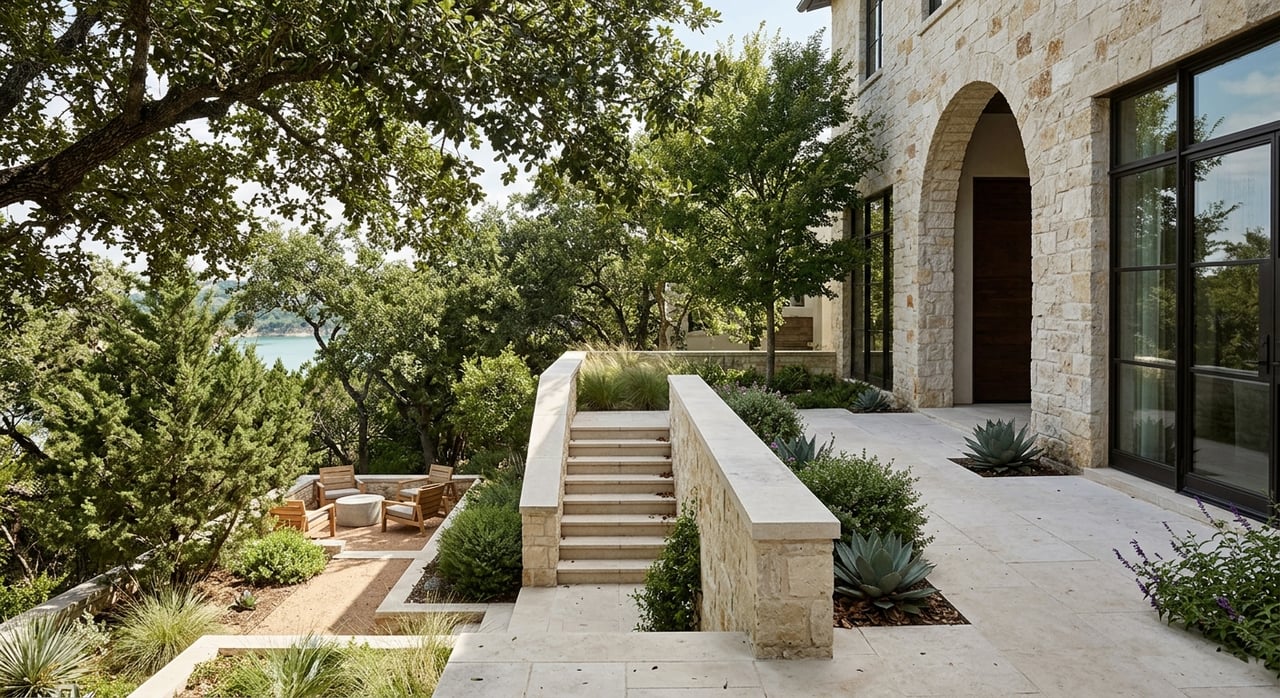
Westlake has the clearest estate-style identity in this group. On Austin’s west side, West Lake Hills is a small city of about four square miles with roughly 1,000 homes and 200 businesses, and the city states that residents and officials are dedicated to preserving the area’s rural environment and natural beauty.
That focus shapes how luxury feels here. Westlake is less about urban walkability and more about space, privacy, wooded surroundings, and a controlled residential environment.
The strongest signal is privacy. City rules and planning documents emphasize preserving scenic wooded character, maintaining buffers, and protecting the rural setting.
The master plan also states that residential development should be limited to single-family detached homes with a minimum lot size of one acre, careful site planning, natural materials, subdued colors, and buffers that help protect privacy. That is a very specific expression of luxury, and it sets Westlake apart from the more close-in neighborhoods.
Westlake’s outdoor identity is nature-driven. The area includes access to wooded hills, preserve land, and views, and the city’s fire evacuation plan references the Wild Basin Wilderness Preserve and Westlake Highlands area as a 227-acre park with 2.5 miles of trails.
This is a different kind of outdoor lifestyle than what you find in Zilker or Travis Heights. It feels more secluded and landscape-focused.
For buyers focused on schools, Westlake is also notable for access to Eanes ISD. The district reports about 7,700 students across nine schools.
Westlake is often the best fit if you want a setting where privacy, land, and residential character lead the conversation. Among these four neighborhoods, it is the least dense and the most estate-like.
Travis Heights brings together historic architecture, green space, and central-city convenience. If you want a neighborhood that feels distinctive and close to the energy of Austin, this area often stands out.
The city’s historic preservation materials note a notable number of Tudor Revival and Spanish Colonial Revival homes built from the 1910s through the 1940s, along with 1920s Craftsman bungalows and 1930s vernacular cottages. That mix gives Travis Heights one of the clearest architectural identities in Central Austin.
In Travis Heights, luxury is tied to character and access. You are not just buying square footage. You are often buying historic texture, architectural variety, and proximity to some of the city’s most active destinations.
That combination creates a neighborhood experience that feels both established and connected. For many buyers, that balance is the real draw.
Travis Heights has unusually strong outdoor access for a close-in neighborhood. The Ann and Roy Butler Hike-and-Bike Trail at Lady Bird Lake is a 10-mile urban trail that the city describes as both a natural gem and an alternative transportation route through the urban core.
The Blunn Creek watershed adds another dimension, with a nature preserve and the Stacy Park Greenbelt. On top of that, the neighborhood sits close to the South Congress business district, which the city describes as stretching from Live Oak to Riverside Drive and offering dining, fitness, salons, and other amenities.
If you are deciding where luxury feels most natural to you, it helps to compare the lifestyle each neighborhood supports.
| Neighborhood | Luxury identity | Best known for |
|---|---|---|
| Zilker | Park-centered, active, iconic | Zilker Park, Barton Springs, Butler Trail, major events |
| Tarrytown | Quiet, established, understated | Mature trees, neighborhood parks, Deep Eddy, classic residential feel |
| Westlake | Private, estate-style, scenic | One-acre minimums, wooded setting, privacy, views, Eanes ISD access |
| Travis Heights | Historic, eclectic, urban-close | Architectural variety, Lady Bird Lake trail access, South Congress proximity |
The best neighborhood depends on what you want luxury to feel like on an ordinary Tuesday, not just during a showing. Ask yourself what matters most in your daily life.
You may prefer:
For relocation buyers especially, this is where local guidance matters. Two neighborhoods can sit close to each other on a map and still offer a very different day-to-day experience.
Luxury buyers in Austin are rarely choosing between “good” and “bad” areas. More often, you are choosing between different versions of a high-quality lifestyle.
That is why neighborhood nuance matters so much. A home in Zilker can feel luxurious because of trail and park access, while a home in Westlake can feel luxurious because of land, wooded buffers, and privacy. Both can be right, but for different reasons.
When you understand those distinctions, it becomes much easier to focus your search and make a confident decision. If you are weighing Central Austin luxury neighborhoods and want expert, high-touch guidance tailored to how you actually live, connect with Kim Fodor.
Stay up to date on the latest real estate trends.
Get assistance in determining the current property value, crafting a competitive offer, writing and negotiating a contract, and much more. Contact me today.