Is A Lock-And-Leave Downtown Lifestyle Right For You
May 7, 2026
May 7, 2026
If you love the idea of stepping out your door and into the middle of Austin’s energy, a lock-and-leave home in downtown may sound like the perfect fit. But convenience always comes with tradeoffs, and what feels effortless for one buyer can feel limiting for another. This guide will help you weigh the real pros, the common sticking points, and the day-to-day details that matter most in Downtown Austin. Let’s dive in.
In Downtown Austin, a lock-and-leave lifestyle usually means living in a condo or similar shared-ownership building designed to reduce exterior upkeep and simplify daily life. Instead of managing a yard, exterior repairs, or many of the tasks tied to a detached home, you trade some control for convenience and shared services.
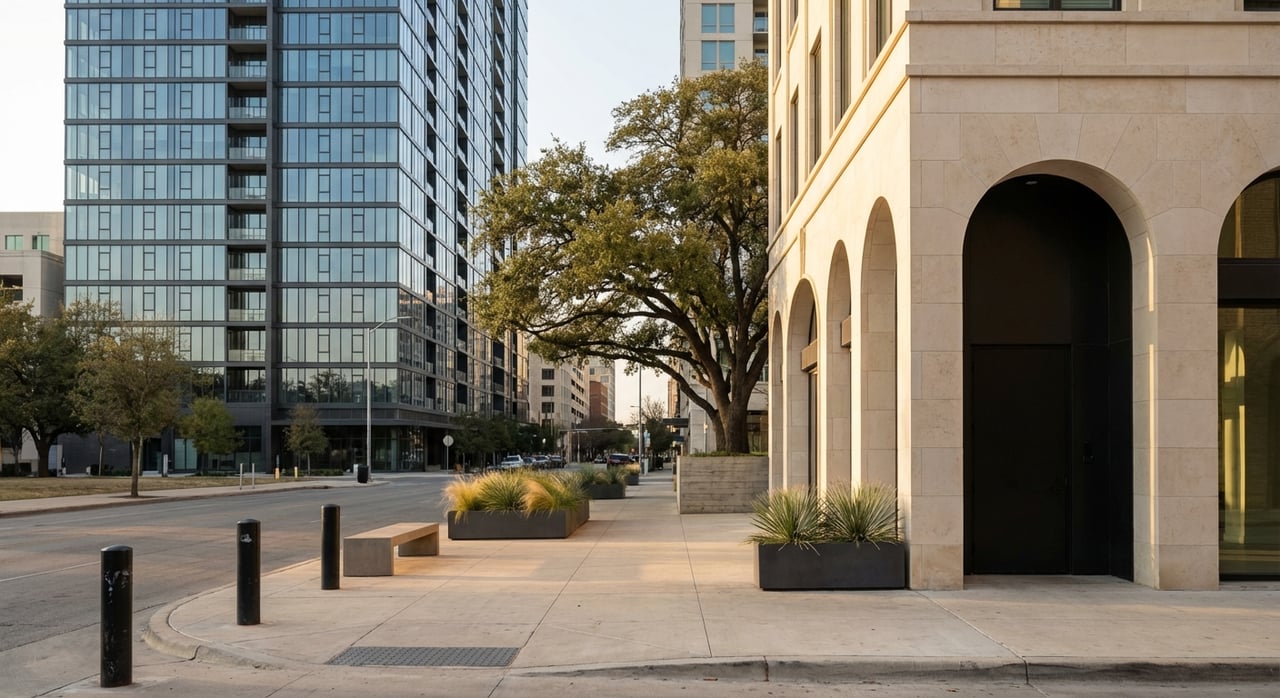
That setup fits naturally with how downtown is planned. The area is designed as a dense, mixed-use district with housing, jobs, public spaces, trails, arts, entertainment, and transit all close together. According to the Downtown Austin Alliance dashboard, downtown includes 15,330 residents, 131,833 employees, more than 12,700 residential units, 150+ acres of parkland, 15 miles of trails, and roughly 2.8 million annual transit riders.
For many buyers, that means your home is not just the unit itself. It is also the ability to walk to dinner, use nearby trails, reach transit, and enjoy a more compact urban routine. If that kind of access matters more to you than a large private yard or a highly customized single-family setup, downtown starts to make a lot of sense.
The biggest draw is convenience. Downtown Austin supports a live-near-everything pattern, and the city’s transit-oriented development approach favors compact, walkable, mixed-use communities near transit rather than places built around large parking fields.
If you travel often, work long hours, or simply want less home maintenance on your plate, that can be a major plus. A lock-and-leave property often lets you leave town with fewer concerns about exterior upkeep compared with a traditional house.
Many buyers also like the lifestyle outside the building. The city’s Downtown Plan highlights public spaces, art, music, theater, historic places, and the green network tied to Lady Bird Lake, Waller Creek, and Shoal Creek. The Ann and Roy Butler Hike-and-Bike Trail alone is a 10-mile loop with more than 2.6 million visits a year, and it functions as both recreation and a practical route through the urban core.
The main appeal of lock-and-leave living is usually lower exterior responsibility, but it is not the same as zero responsibility. In most condo settings, you still own your unit and remain responsible for the parts of the property tied only to your unit, while the association generally handles common elements.
That arrangement comes with monthly or recurring dues. Under Texas condo law, assessments must be based on an annually adopted budget, and owners share in the costs of maintaining common elements. In practical terms, you should expect dues to be part of your monthly housing cost, not an afterthought.
You also need to plan for the possibility of special assessments. Those can come up when a building faces emergency repairs or larger projects that are not fully covered by current funds. A home may look low-maintenance on the surface, but the financial reality depends heavily on the health of the building and its budget.
Association rules matter just as much as dues. Building policies may address parking, pets, guest access, exterior changes, rentals, and use of common areas. So before you assume a property is truly easy to own, it is worth looking closely at what the association covers and what it expects from you.
Not every downtown condo offers the same version of lock-and-leave living. The details can vary a lot from building to building, and that is often where buyer satisfaction is won or lost.
Here are some of the most important questions to ask:
These questions may not feel glamorous, but they are essential. A building with strong management, clear rules, and realistic budgeting can support a smooth ownership experience. A building with unclear policies or underfunded needs can create stress fast.
For many buyers, parking ends up being the deciding factor. Downtown Austin is walkable, but that does not mean parking is simple.
The City of Austin states that metered on-street parking in downtown is intended for short-term visits, and private off-street lots and garages are not city-managed. The city also notes that downtown metered parking is enforced for much of the week, and it operates several city-owned garages, including the Central Library Garage, City Hall Garage, One Texas Center Garage, PDC Garage, and Seaholm Garage.
That means you should never assume street parking will cover your daily needs. If you own a car, ask whether the unit comes with assigned parking, whether spaces are deeded or leased, how guest parking works, and whether overnight street parking is realistic.
This is especially important if you regularly host visitors or have a multi-car household. A home that feels ideal in photos can become much less convenient if parking requires constant planning.
One reason lock-and-leave living works in Downtown Austin is that many residents are not relying on a car for every trip. CapMetro’s High-Frequency Network includes 14 routes running every 15 to 30 minutes from 6 a.m. to 8 p.m., seven days a week, and Rapid routes connect downtown with major corridors including UT and South Congress.
Downtown Station at 4th and Neches adds another layer of flexibility. It connects rail riders to bus service, CapMetro Bikeshare, scooters, and Austin’s bicycle trails, which can make daily errands or commuting easier if you prefer to drive less.
That does not mean every building feels equally convenient. Walkability is strongest when your unit is close to the places you actually use, whether that is groceries, parks, transit stops, dining, or office space. The lifestyle works best when your routine matches the neighborhood around you.
It is important to go in with realistic expectations. Downtown Austin offers energy, activity, and access, but it is not a static environment.
The Downtown Austin Alliance reports ongoing development, I-35 reconstruction, future Project Connect transit expansion, and other major projects that can affect traffic, access, and the feel of the district over time. For some buyers, that is part of the appeal because it reflects investment and growth. For others, it may feel too busy or unpredictable.
The area’s cultural identity is also a big part of the experience. Downtown cultural districts are central to Austin’s live music, arts, and entertainment scene, and downtown ambassadors provide cleaning, safety, and hospitality services with a 24/7 presence in the Downtown Public Improvement District. That can make downtown feel more like a serviced urban environment, but it also means you are living in a place with constant movement.
A downtown lock-and-leave home is often a strong fit if you value:
It can be a weaker fit if you want:
The right answer depends on what you want your home to do for you. If your priority is freedom, access, and lower day-to-day upkeep, this lifestyle can be a great match. If your priority is space, flexibility, and full control, you may feel more comfortable in a different type of property.
The best downtown purchase is not just the prettiest unit or the best view. It is the one that fits your real routine, your budget, and your expectations about ownership.
When you evaluate options, look beyond finishes and amenities. Pay close attention to association documents, parking details, transit access, building rules, and the pace of the area immediately around the property.
In a market like Austin, that local context matters. A thoughtful, building-by-building approach can help you avoid surprises and find a home that truly supports the way you want to live.
If you are weighing whether a downtown lock-and-leave home fits your goals, Kim Fodor can help you compare buildings, evaluate tradeoffs, and make a confident move in Austin.
Stay up to date on the latest real estate trends.
Get assistance in determining the current property value, crafting a competitive offer, writing and negotiating a contract, and much more. Contact me today.