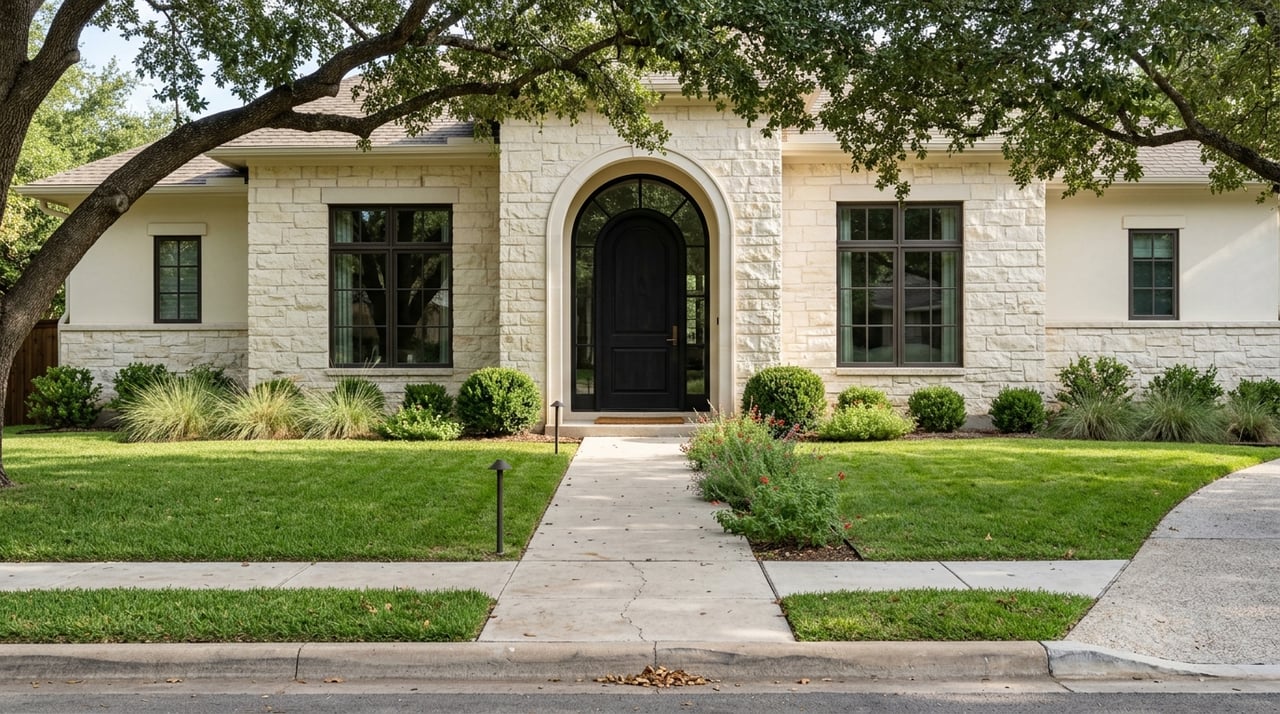
Everyday Living Under The Oaks In Pemberton Heights
June 4, 2026
June 4, 2026
If you want a Central Austin neighborhood that feels established, green, and genuinely residential, Pemberton Heights stands out fast. You are not just choosing a location here. You are choosing a daily rhythm shaped by canopy streets, historic homes, nearby trails, and quick access to some of Austin’s biggest destinations. If you are curious what everyday life actually feels like in this part of town, this guide will walk you through it. Let’s dive in.
Pemberton Heights is a small Central Austin neighborhood in ZIP code 78703 with 613 residences, according to the neighborhood association. It is also part of the Old West Austin National Register Historic District, which adds important context to how the area looks and feels today.
What stands out first is the setting. The neighborhood sits on a limestone shelf above Shoal Creek, and some homes along the eastern edge have views toward downtown, the Capitol, and the University of Texas. That topography, along with century-old heritage trees and landscaped streets, gives the neighborhood a calm, rooted feel that is hard to replicate.
The area feels residential, but not disconnected. The neighborhood association notes that UT’s main campus, the Texas State Capitol complex, downtown, the city’s main medical center, and grocery destinations like Whole Foods, Central Market, and Trader Joe’s are all within about two miles.
Pemberton Heights is not defined by one home style. Instead, the neighborhood includes a range of historic architectural traditions, including Tudor Revival, Colonial Revival, Classical Revival, Spanish Colonial Revival, Italian Renaissance Revival, Craftsman, and Prairie School styles.
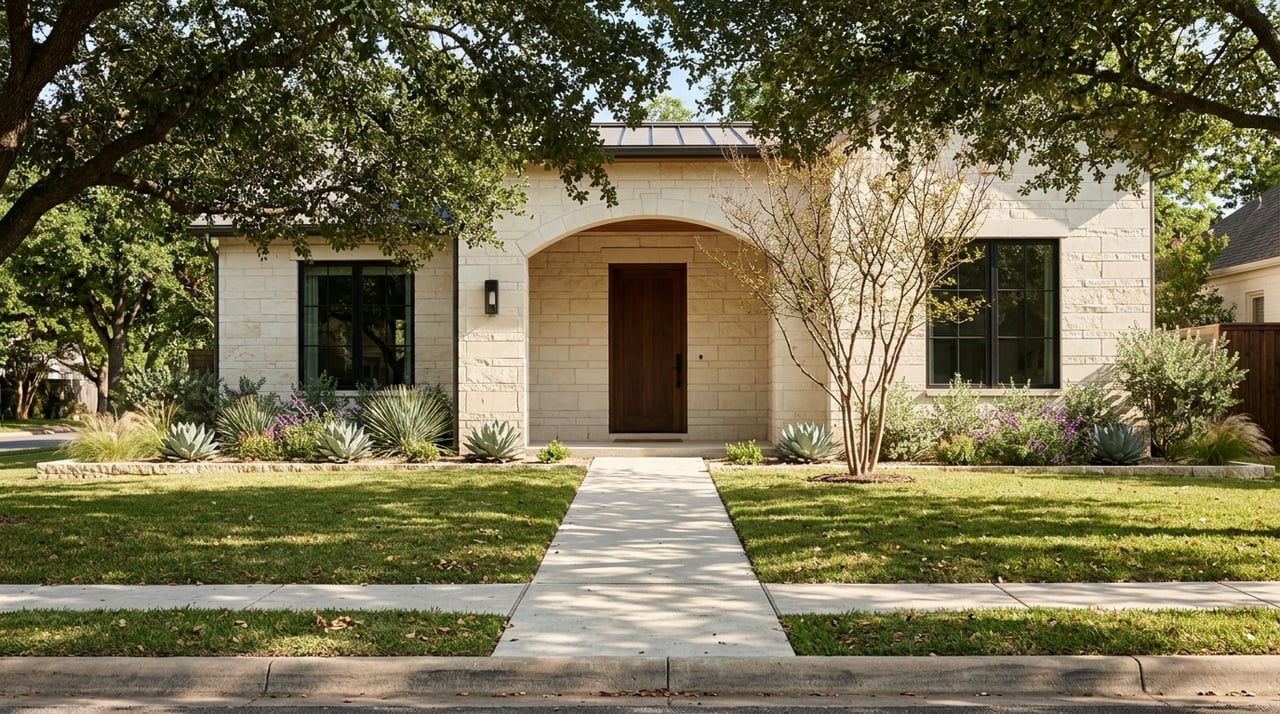
That variety keeps the streetscape visually interesting, but there is still a strong sense of continuity. The neighborhood association notes that many homes sit back 30 to 40 feet from the street, which helps create a more open and landscaped look from block to block.
Small details also shape the experience of living here. Ceramic curb tiles, small parks, landscaped traffic islands, and mature trees give the neighborhood a layered, intentional feel that reflects its long history.
Pemberton Heights benefits from being part of a much larger historic context. The City of Austin describes the Old West Austin National Register Historic District, accepted in 2003, as the largest historic district in Texas, with roughly 1,600 homes and 2,500 buildings.
City documents also describe the district as largely intact, with predominantly single-family homes and a road network shaped by early automobile-suburb planning. In practical terms, that means the original neighborhood form still reads clearly today. When you drive or walk through the area, the historic character is not just a label. It is visible in the layout, setbacks, and scale.
The neighborhood association also notes that more than 40 homes in Pemberton Heights are designated historic landmarks. Notable examples include Pemberton Castle and the Reed Estate, which show the neighborhood’s broad architectural range.
One of the biggest lifestyle advantages in Pemberton Heights is how much you can reach in a short drive. For many buyers, that balance is the real draw. You get a neighborhood that feels quiet and established, but you are still close to work centers, cultural destinations, and everyday shopping.
The neighborhood association points to easy access to downtown, UT, the Capitol complex, and the city’s main medical center. Grocery options within about two miles include Whole Foods, Central Market, and Trader Joe’s. That kind of convenience can make daily life simpler without giving up the sense of living in a distinct neighborhood.
For buyers relocating to Austin, this can be especially appealing. You do not have to choose between central access and residential character. In Pemberton Heights, both are part of the appeal.
Outdoor access is one of the neighborhood’s strongest lifestyle features. Pemberton Heights sits next to the Shoal Creek Trail, and the neighborhood association says Pease Park is about half a mile away. Lady Bird Lake’s trail system is about two miles away.
If you like being outside before work, after dinner, or on weekends, those nearby options matter. The City of Austin describes the Shoal Creek Trail as one of Austin’s oldest trail systems, running from Lady Bird Lake to 38th Street, with continued improvement and expansion efforts.
Pease Park adds another important layer. Pease Park Conservancy identifies it as Austin’s first public park, and today it includes active stewardship and programming at Kingsbury Commons in partnership with the City of Austin.
The neighborhood association also notes short-drive access to Zilker Park, the Barton Creek Greenbelt, Mount Bonnell, and Emma Long Park. So while Pemberton Heights itself feels tucked in, it also puts a wide range of outdoor destinations within easy reach.
Some neighborhoods look great on paper but feel anonymous in daily life. Pemberton Heights has a more active neighborhood rhythm than many close-in areas. According to the neighborhood association, residents gather for events like happy hours, Easter egg hunts, picnics, and carriage rides.
That does not mean every buyer is looking for the same kind of community involvement. It simply shows that the neighborhood has an organized and ongoing civic life, which can add to the sense of continuity and care.
The same is true for the public spaces within the neighborhood. Community-maintained triangles at key intersections and Hartford Park, which includes picnic tables, benches, swing sets, and playscapes, reinforce the idea that this is a lived-in neighborhood, not just a collection of beautiful homes.
Pemberton Heights remains compelling for one simple reason: there is not much else exactly like it. It is a small, low-density historic neighborhood with a limited number of residences, mature trees, preserved streetscapes, and close access to some of Austin’s most important destinations.
That combination creates a sense of scarcity. Buyers looking here are often drawn to the neighborhood’s continuity more than novelty. The appeal is in the established setting, the classic architecture, and the fact that the neighborhood’s original design character is still so visible.
For many people, that translates into a very specific lifestyle fit. If you want a close-in Austin address with canopy streets, historic homes, access to trails and parks, and a residential feel that has lasted over time, Pemberton Heights keeps earning a close look.
If Pemberton Heights is on your shortlist, it helps to look beyond surface charm. In a neighborhood with historic context and a limited housing count, each property can have its own mix of architectural features, updates, lot characteristics, and street presence.
That is one reason neighborhood-specific guidance matters here. Two homes may be close together on a map but offer very different daily experiences based on their setting, view orientation, proximity to Shoal Creek, or relationship to the streetscape.
If you are relocating or moving within Austin, it can also help to think about how you want your week to function. Commute patterns, outdoor habits, access to grocery stores, and your preferred home style all play a role in whether this neighborhood is the right fit.
In a neighborhood like Pemberton Heights, buying well usually means paying attention to both the big picture and the block-by-block details. You want to understand not only why the neighborhood is desirable, but how a specific home fits into that broader setting.
That is where local knowledge can make a meaningful difference. When you are evaluating a distinctive Central Austin neighborhood with historic character and limited inventory, clear guidance helps you move with more confidence.
If you are exploring Pemberton Heights or comparing it to other close-in Austin neighborhoods, Kim Fodor can help you navigate the details with a high-touch, informed approach.
Stay up to date on the latest real estate trends.
Get assistance in determining the current property value, crafting a competitive offer, writing and negotiating a contract, and much more. Contact me today.